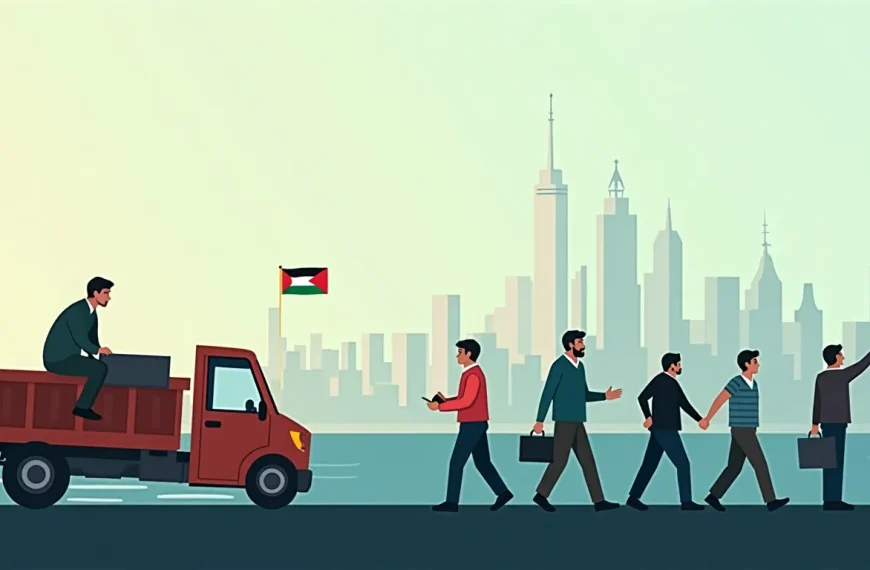

Summary
You know how we’d feel if we were unfairly labeled as criminals because of a few tattoos or social media posts? Well, that’s what happened to a majority of the 238 Venezuelan immigrants who were deported by the Trump administration to a maximum-security prison in El Salvador. Despite most of them not having any criminal record in the US or their home countries, they were branded as “terrorists” and “the worst of the worst”, which is like labeling a whole basket of apples as rotten because of a few bad ones.
Key Points
– The Trump administration deported 238 Venezuelan immigrants to a maximum-security prison in El Salvador in mid-March, labeling them as terrorists.
– Homeland Security data shows that the majority of these immigrants had not been convicted of crimes in the United States. Only 32 of the deportees had U.S. criminal convictions, mostly nonviolent offenses.
– The data also reveals only 6 of the immigrants were convicted of violent crimes, and 130 had no criminal record or pending charges.
– Foreign offenses were found for only 20 of the deported men, including 11 violent crimes such as armed robbery, assault, or murder.
– The Trump administration maintained that the deportees were assessed based on crimes committed inside and outside the U.S., but the government data contradicts these claims.
Background
The deportation of these Venezuelan immigrants is part of the Trump administration’s hardline immigration policy. The administration has been criticized for its treatment of immigrants, including allegations of human rights abuses. This particular deportation operation has become one of the most consequential in recent history due to its potential to redefine how the U.S. handles immigrants.
Future Implications
This deportation operation could have far-reaching implications for U.S. immigration policy, potentially impacting the treatment of immigrants living in the U.S., whether legally or illegally. The Trump administration’s actions could set a precedent for future administrations, potentially leading to more deportations of immigrants without judicial review. This situation also raises serious questions about the due process rights of immigrants in the U.S., with potential implications for civil liberties.