
Summary
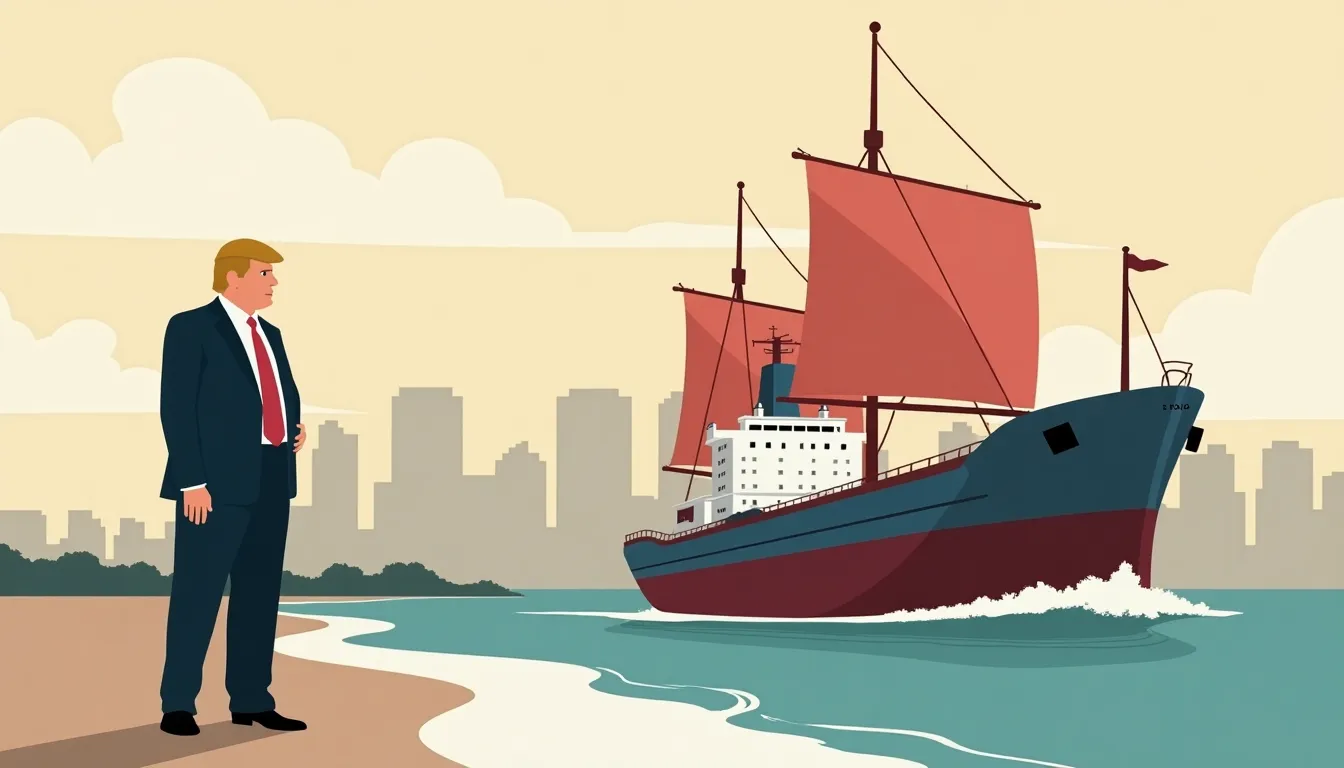
Imagine the week starting with your strict boss threatening to raise the office coffee prices by 25%, causing a stir among the staff, and ending with your co-worker turned best negotiator having a private dinner with the boss. This is similar to what happened when President-elect Donald Trump threatened to impose a 25% tariff on all of Canada’s exports to the US, and Prime Minister Justin Trudeau flew down to discuss it over dinner. The potential tariffs are like a storm cloud looming over the economies of both countries, especially the auto and oil industries, with the uncertainty causing as much unease as the potential financial impact.
Key Points
• President-elect Donald Trump began the week threatening to impose a 25% tariff on all Canadian exports to the United States. The week ended with Prime Minister Justin Trudeau joining Trump for a dinner at Mar-a-Lago.
• The dinner, attended by top aides from both countries, gave no insight into what may have been achieved.
• During Trump’s first presidency, he imposed tariffs on aluminum and steel exports from Canada, Mexico, and the European Union. These tariffs were eventually negotiated away by Trudeau’s government.
• This week brought skepticism around whether Trump would follow through with his plan to introduce the tariffs on his first day in office, January 20.
• The potential tariffs could have significant impacts on Canada’s economy, which is heavily reliant on exports and closely integrated with the U.S. economy.
Background
• The United States and Canada have had a closely integrated economy since the Canada-U.S. Free Trade Agreement of 1989.
• The U.S. has historically encouraged the development of Alberta’s oil and gas industry and is Canada’s largest customer for oil.
• The auto industries of both countries were amalgamated in 1965 through a managed trade agreement, making it difficult to unwind these links.
Future Implications
• If tariffs are imposed, they could have major impacts on the auto and oil industries, both of which are significant Canadian exports to the U.S.
• Analysts suggest that tariffs could lead to higher gas prices for American motorists, lower profit margins for U.S. refineries, and lower prices for heavy Canadian crude oil.
• The possibility of tariffs has already prompted varying responses from the Canadian and Mexican governments, potentially straining relationships.